A confirmed private landing changes expectations overnight, because public ambition now runs with commercial speed. NASA’s validation turns a daring attempt into a measurable step, and that matters for budgets, safety, and science. A nimble lander reached the Moon, while agency oversight aligned testing with long-term goals. Instruments are already shaping checklists, since hardware that survives descent can guide future crews. Momentum grows as teams share risk, sharpen playbooks, and prove how fast careful engineering can move.
Why this Moon touchdown redefines collaboration and capability
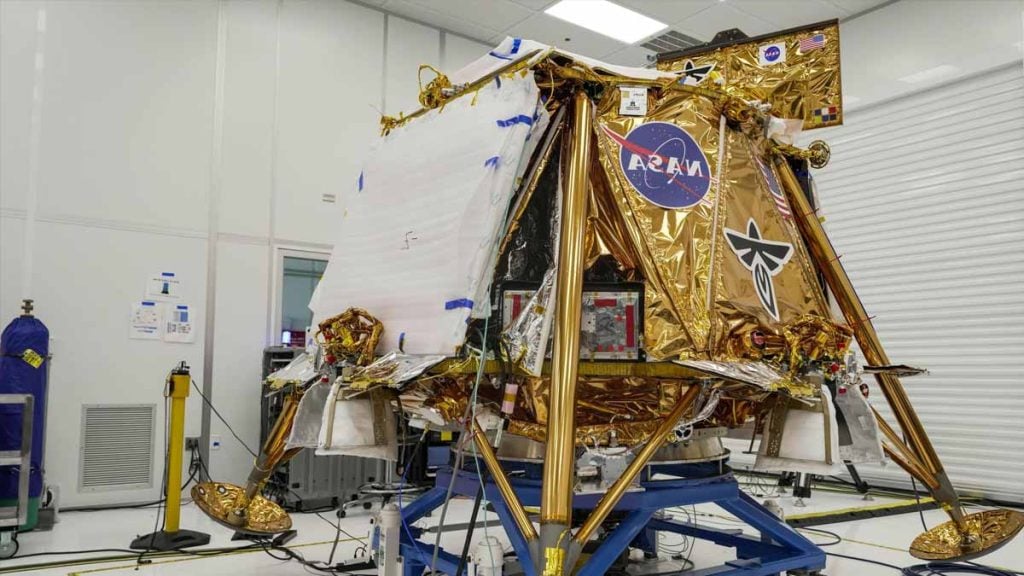
A verified touchdown puts private spaceflight beside national programs, and NASA’s confirmation cements that shift. The moment matters because a commercial vehicle reached the Moon under agency oversight, then met mission targets. “American companies are leading for the benefit of all,” said acting Administrator Janet Petro, highlighting shared ambition.
It validates guidance, propulsion, and hazard modeling, while it proves mission-assurance practices now scale outside government hangars. Teams demonstrated precise terminal control, redundant navigation, and robust telemetry. Because confidence compounds after clean landings, engineering choices become bolder, and test campaigns focus sooner on durability, interfaces, and maintainability.
It also reframes timelines. Public goals, backed by private velocity, speed instrument deliveries and surface trials. Artemis benefits because early tech scouts reduce risk before crewed sorties, and science gains because affordable flights widen access. The result is a sustainable cadence where discoveries and logistics advance together, not sequentially.
From Florida liftoff to precise landing near Mons Latreille
Launch occurred in January 2025 from Florida, then a cruise, approach, and powered descent unfolded as planned. Controllers tracked autonomous logic as sensors reconciled terrain with onboard maps. The final burn steered toward the Moon surface, aiming for flat basaltic plains, while hazard avoidance protected antennas, legs, and instrument windows.
The lander targeted Mare Crisium near Mons Latreille, a site shaped by ancient volcanism. Scientists chose it because crustal chemistry and heat signatures there refine models of basin formation. The terrain also supports sampling strategies that limit plume disturbance, since smoother regolith reduces ejecta, contamination, and re-deposition around critical sensors.
Mission design mirrored Artemis needs. Surface datasets feed hazard maps for future regions, while flight dynamics validate software stacks for descent and plume effects. Because repeatability matters, teams documented margins, telemetry clocks, and thermal soak profiles, so future vehicles inherit tested parameters rather than rediscovering them during expensive acceptance flights.
Handling Moon hazards: dust, heat, and twilight performance
Lunar dust complicates everything because fine grains cling, abrade, and infiltrate. Near the terminator, low Sun angles charge particles, so electrostatic lofting becomes likely on the Moon day-night boundary. Operations account for that behavior, while engineers test coatings, gaskets, and cable routes to keep particulate from optics and joints.
Thermal swings challenge seals and batteries, which is why a subsurface drill maps the gradient and heat flow. Measurements at depth inform rovers, habitats, and instrument duty cycles. Designers, because they trust real numbers over assumptions, refine radiators, heaters, and enclosures to balance conductivity, emissivity, and mass across duty phases.
Twilight trials matter as sensors cool, lubricants thicken, and solar input drops. Teams record calibration drift, latency in actuators, and noise floors inside detectors. Those results guide next-generation rovers and spacesuits, so seals, dust covers, and avionics remain stable when crews stage sorties, collect cores, and traverse shaded slopes.
What the instruments measure, and why the numbers matter
A coring drill penetrates ten feet, or three meters, to chart thermal profiles and heat flow within the Moon interior. That depth clarifies crust thickness and volatile stability, while it benchmarks hardware endurance. Data also reveal how regolith compacts with depth, which shapes anchoring strategies, cable plans, and deployment footprints.
A magnetotelluric sounder listens for natural fields, then infers conductivity underground. Because conductivity correlates with composition and temperature, teams map buried basalt and potential ice-rich layers. Those maps, integrated with imagery and topography, reduce uncertainty for traverse planning, antenna placement, and exclusion zones around sensitive electromagnetic equipment.
A gas-based regolith sampler collects grains without arm linkages, so complexity and mass drop. Fewer actuators mean fewer failure points, and power budgets shrink accordingly. Because efficiency compounds across systems, lighter sampling leaves more margin for radios, heaters, and shielding, which improves science return while protecting sensitive components.
Navigation breakthroughs and the CLPS model that accelerates delivery
The LuGRE receiver locked onto weak GPS and Galileo signals at the surface, which proves lunar GNSS feasibility. Landers can navigate more independently, so reliance on Earth tracking decreases. Smaller missions benefit most, since a compact board enables timing, positioning, and contingency modes directly on the Moon surface.
NASA’s Commercial Lunar Payload Services uses competitive task orders and indefinite-delivery contracts to move faster. Costs drop because providers reuse buses and processes, while risk spreads across flights. The Blue Ghost landing ranked as only the second commercial soft landing, which signals resilience, iteration, and healthy pressure for performance.
With repeat flights, providers refine software, thermal margins, and avionics after every landing. The ecosystem grows as components standardize, logistics accelerate, and payload interfaces stabilize. Because capability scales with cadence, sustainable presence becomes plausible, and Artemis gets a reliable pipeline for instruments, power systems, and mobility across diverse sites.
Looking ahead as shared capability reshapes near-term lunar goals
This milestone signals a practical shift: public missions set direction while commercial teams deliver quickly. Costs fall as lessons compound, and science gains because instruments arrive more often. Navigation, dust control, and heat-flow tools progress together, so risk drops flight by flight. With that momentum, building sustainable operations on the Moon stops feeling speculative and starts looking methodical, measured, and near at hand.