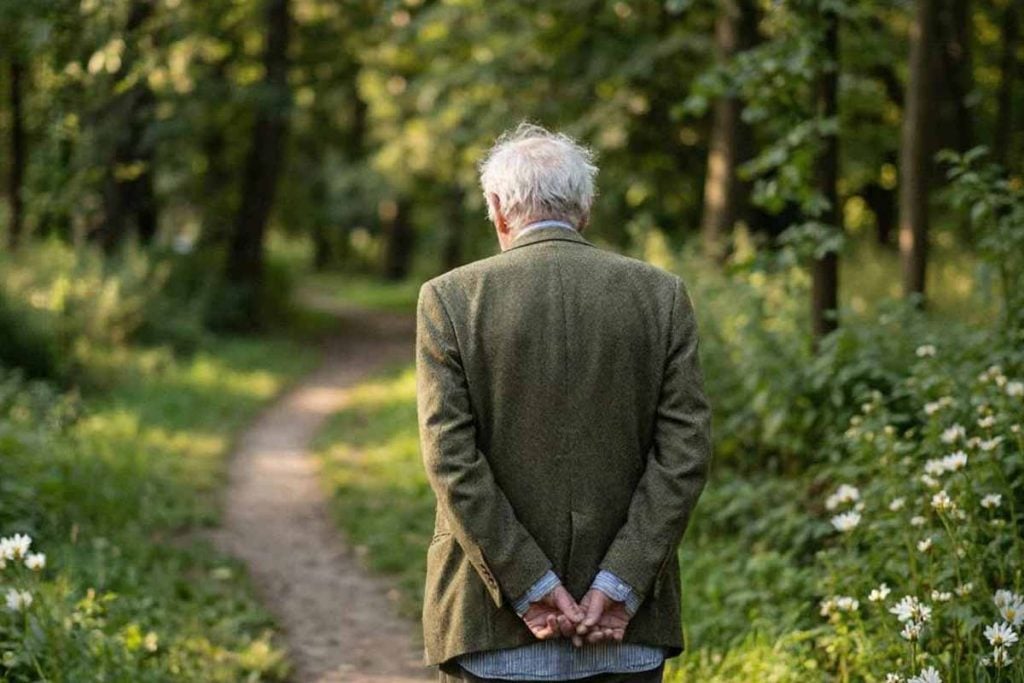
That unassuming walk with hands tucked behind your back can say more than you expect. Far from a quirk, it often marks a mind turning inward, arranging thoughts with quiet intent. Through the lens of psychology, this posture narrows distractions, steadies emotions, and signals reflective focus. Because routine noise fades, your body helps your brain slow down and sort what matters. That is why many adopt it during complex moments or while seeking calm.
Why this quiet posture supports reflective focus
Hands settle behind the back, and your eyes meet a cleaner field. Visual clutter drops, so attention stops chasing stray cues. The body sets a slower rhythm, while breathing evens out. That shift leaves room for ideas to arrange themselves and for feelings to land without rush.
Because your hands leave the foreground, the brain stops scanning them for action. Distance reduces fidgeting, which keeps impulses in check and aids composure. In everyday terms, psychology would say your posture becomes a simple cue. Slow the pace, protect attention, and free space for reasoning now.
People slip into this gait when they weigh choices or unpack heavy feelings. The movement remains unhurried, yet it supports crisp thinking because distractions recede. You walk, you breathe, and thoughts sort by priority. Clarity builds, not by force, but because the body finally gets out of the way.
How psychology interprets hands-behind-back walking
Body language specialists link this gesture to introspection. The hands move out of view, so thinking takes center stage and the mind wanders inward. People use the pause to process decisions, because the posture encourages order and trims noise. It supports clarity without needing a desk, screen, or notebook.
The mood feels contemplative, and you will notice it in teachers pacing a room, or scientists circling ideas. Walkers who love thinking on the move lean on rhythm for insight. Because observation matches experience, psychology treats the stance as a sign of sustained attention rather than mere habit.
Calm also shows up, because the posture softens urgency and invites patience. People carve a momentary bubble from noisy surroundings, while they reset and listen inward. The hands go behind, and the gaze goes forward. The world quiets enough to manage stress without retreating from life or responsibilities.
What people tend to feel and do in this stance
Your body does not move at random, because posture often expresses concerns that words miss. Hands placed behind read like nonverbal communication, while the stride becomes measured and sure. The signal says, I am thinking, yet I am steady. People read that signal, and they often respond by giving room.
During mental clutter, this small habit steadies attention, and it helps you regain calm. The repeated gesture works like an anchor, because predictability settles the nervous system. In that sense, psychology sees a loop: posture reduces noise, and focus returns. A renewed sense of control makes useful choices easier.
Many notice a mindset shift after changing hand position, because attention stops spilling outward. Grounding rises, anxiety eases, and the walk feels purposeful rather than rushed. The lesson travels both ways. The body feeds the brain, and the brain updates posture, so state and stance keep refining one another.
Signals and context that give it meaning
Meaning depends on moment and surroundings, because one gesture never tells a full story. Sometimes you put your hands back simply to rest shoulders, while you enjoy a quiet walk. The stance still reduces distractions, yet motives vary, so interpretation works best when linked to what else is happening.
It is not a diagnosis, and it is not a badge of superiority. Observers can notice patterns, because posture offers clues; however, conclusions deserve care. As a practical rule, psychology invites context first. Track the environment, the task, and the person’s baseline before you guess what the stance communicates.
Contrast also helps, because other gestures mean something different. Clenched fists often signal urgency, while crossed arms may protect space. Hands placed behind relax the front of the body, so the chest opens and the gaze lifts. That pattern fits reflection, yet it can also simply feel comfortable today.
Everyday ways psychology turns this gesture into self-care
During overload, try a slow walk with your hands tucked back, and watch what changes. Noise recedes, because your body simplifies the scene and gives attention a gentler track. The gait offers permission to pause without stopping life, which makes headroom for choices that felt crowded minutes earlier.
Instead of clenched fists or restless fidgeting, let the arms rest and the stride stay smooth. The move seems small, yet it interrupts stress spirals before they lock in. Because practice builds habit, psychology recommends repetition: pair the stance with mindful breathing, and calm returns faster on busy days.
Small gestures often carry surprising weight, because they align body and mind without effort. Notice how thoughts settle, then note what decisions surface once urgency eases. Keep the practice available for heavy days, since you can always step outside and walk briefly. You return with steadier priorities and emotional balance.
Why this mindful stride keeps helping when life speeds up
When life accelerates, this modest stance remains a reliable reset. Hands placed behind quiet the field, so attention collects and emotions settle. Because action feels deliberate again, choices improve and stress loosens its grip. Through everyday psychology, the walk becomes a portable practice: restful, private, and easy to repeat whenever you need clarity. It will not cure every problem, yet it restores the margin needed to think well. You slow, you breathe, and you reconnect with what matters before you step back into motion.